
The Claims Data That Forced a Rethink
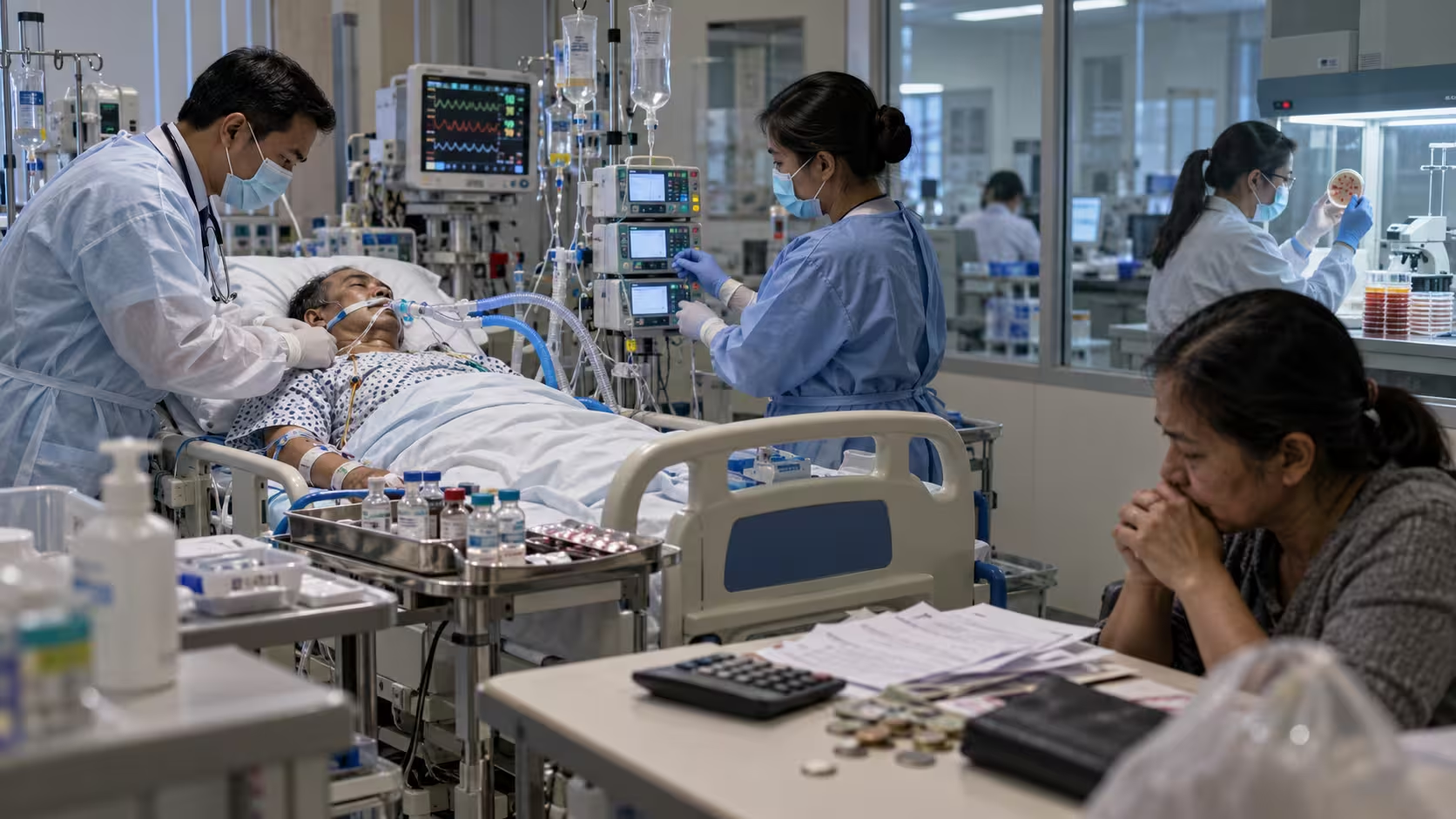
The strongest argument for the Philippines’ primary care pivot is not ideological. It is actuarial. Roughly one in three PhilHealth inpatient claims involves a condition that strong primary care should have prevented or managed early . Hypertension complications, uncontrolled diabetes, and late-stage infections fill hospital beds that preventive consultations could have kept empty.
PhilHealth’s response—the YAKAP program—represents a fundamental reallocation of insurance logic. Instead of paying hospitals for episodes of care, PhilHealth now pays primary care facilities a fixed annual sum per member and trusts them to keep that member well enough not to need hospitalization. The capitation rate is P1,700 per member per year .
How Capitation Changes Provider Behavior
Under fee-for-service arrangements, providers earn more by doing more. Under capitation, the incentive inverts: every unnecessary test or consultation eats into the facility’s fixed budget. Tamparong of PhilHealth-7 argues that this prevents unnecessary laboratory requests and ensures that only medically indicated tests are conducted based on physician assessment .
But capitation carries its own risks. A facility with a large panel of complex patients could face financial strain if the fixed payment does not reflect actual burden. The P1,700 rate is uniform, regardless of a patient’s age, comorbidities, or geographic isolation. For now, the program relies on the FPE to risk-stratify patients and on the referral system to escalate complex cases to higher-level facilities.
The P60 Billion Question
The Supreme Court’s December 2025 ruling on the unconstitutionality of transferring PhilHealth reserves to the national treasury returned P60 billion to the state insurer . That money is now underwriting YAKAP’s nationwide expansion, including the P20,000 medicine allowance per member and cancer screening packages. Without it, PhilHealth’s 2026 benefit payments—projected at P378 billion to P400 billion—would have exceeded available funds .
The fiscal lesson is uncomfortable: the preventive shift depends on a one-time legal windfall. Whether the program can sustain itself once the P60 billion is absorbed remains an open question that neither PhilHealth nor the Department of Health has fully answered publicly.
The Demand-Side Failure
Supply-side readiness is ahead of public behavior. In Northern Mindanao, 762,803 beneficiaries completed their FPE by December 2025 . Nationwide, 40 million are enrolled . Yet utilization remains stubbornly low relative to need. Ardiente’s admission in Calabarzon—that free services go unused because people wait until they are sick—applies across regions .
PhilHealth and the Commission on Human Rights have begun framing the issue in rights-based terms, arguing that access to preventive care is not a privilege but a state obligation . That framing may carry more weight in policy circles than in households where a day spent at a clinic means a day of lost income. The program’s success may ultimately depend less on clinical design and more on whether the economic logic of prevention becomes visible to families: a free check-up today versus a catastrophic hospital bill tomorrow.
The Referral Network as the Real Test
YAKAP’s tiered design—primary care facilities managing common conditions, hospitals handling specialized cases—requires functional referral networks that many regions are still building. The Department of Health reported 114 Universal Health Care Integration Sites by 2026, covering 95% of provinces and highly urbanized cities . But integration on paper does not guarantee that a patient in a Geographically Isolated and Disadvantaged Area can reach a YAKAP clinic, much less a specialist when needed.
The shift from treatment to prevention is, at its core, a bet that the Philippines can build a health system that reaches people before their illnesses become expensive. The enrollment numbers suggest the infrastructure is expanding. The claims data suggests the need is urgent. Whether the two converge is the story of the next five years.