
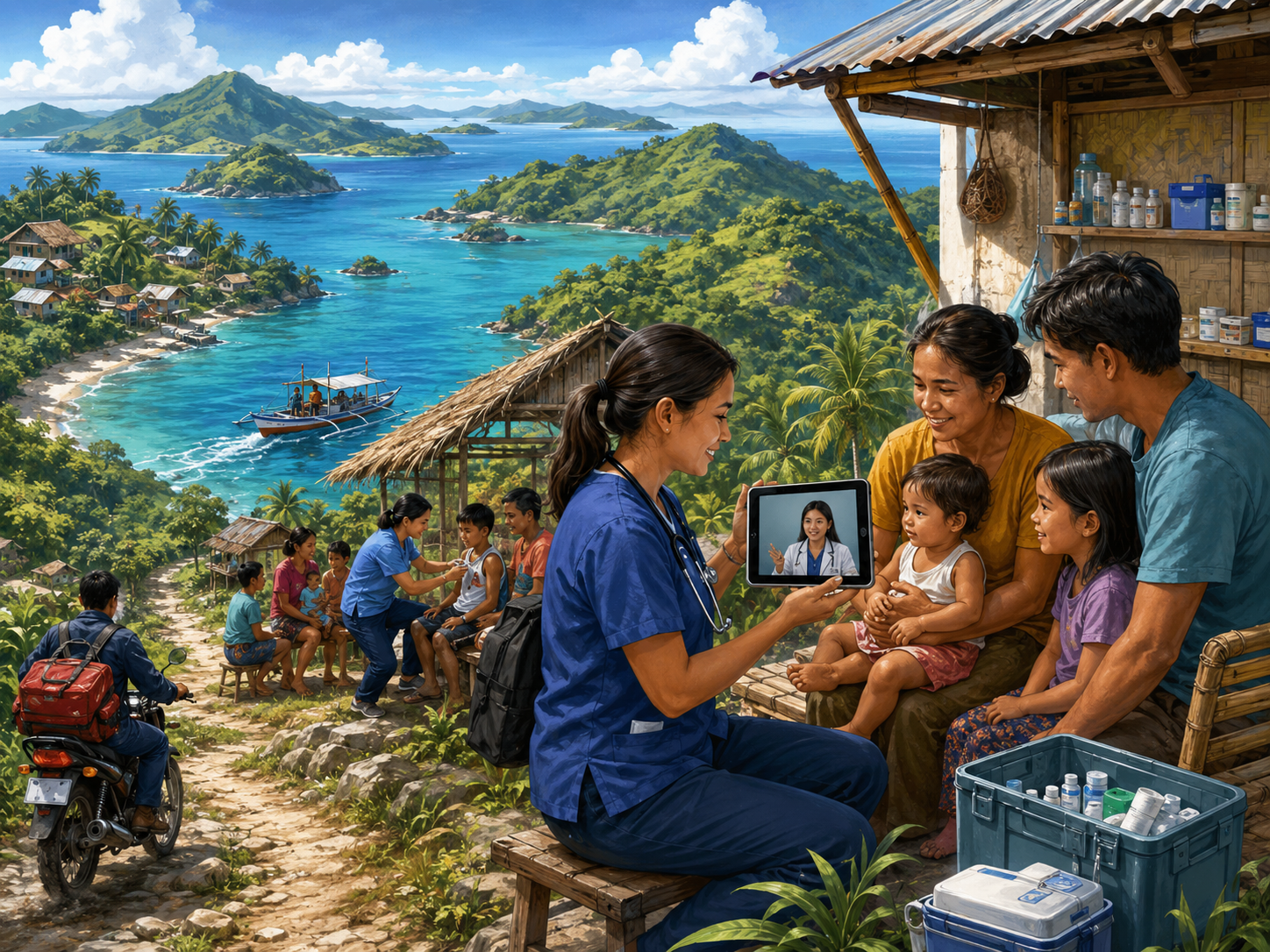
In the Philippines, access to quality healthcare is a persistent challenge in remote and rural areas. The country’s archipelagic geography creates logistical barriers, with many communities located far from hospitals and medical centers. Residents often have to travel long distances by boat, motorbike, or poorly maintained roads to receive medical attention, which can delay treatment and exacerbate health conditions.
A major challenge is the uneven availability of healthcare professionals. Urban areas attract the majority of doctors, nurses, and specialists, leaving rural and remote communities underserved. This shortage makes it difficult for residents to receive routine medical care, preventive services, or timely intervention for emergencies. Many families are forced to rely on occasional visits from mobile health teams or delay treatment due to limited local resources.
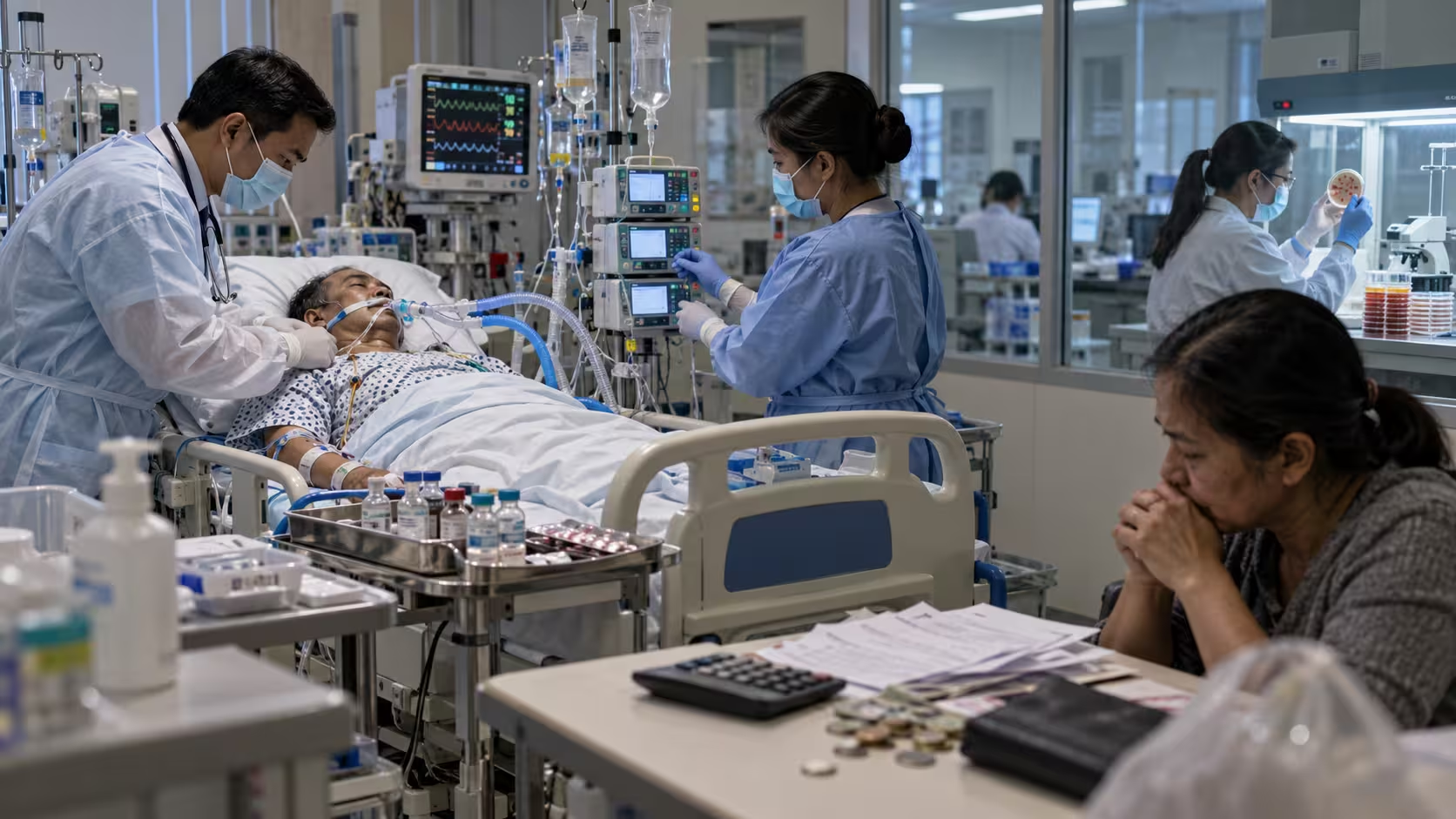
Infrastructure limitations further complicate healthcare delivery. Many remote health centers lack essential medical equipment, stable electricity, and sufficient supplies of medications. The absence of modern diagnostic tools means that complex illnesses often go undetected until the patient can reach a larger facility. Limited transportation options also hinder patient access to specialized care, particularly for those with chronic or severe conditions.
Economic factors significantly influence healthcare access. Poverty is widespread in remote areas, making travel costs, medical fees, and medications prohibitive for many families. Low health literacy and cultural beliefs may also prevent residents from seeking timely care. These challenges result in high rates of preventable diseases, maternal and infant mortality, and unmanaged chronic illnesses in rural communities.
To address these obstacles, government initiatives and NGO interventions have focused on improving healthcare outreach. Mobile clinics provide on-site consultations, vaccinations, and basic treatments in isolated villages. Telemedicine platforms enable remote consultations with urban specialists, reducing the necessity of long journeys. Community health workers act as critical links between healthcare systems and local residents, providing education, basic care, and referrals when necessary.
Collaborations with international organizations have enhanced healthcare infrastructure and professional capacity in remote regions. Donations of medical equipment, facility upgrades, and specialized training for local health personnel improve service quality and availability. Programs like PhilHealth reduce the financial burden on families, encouraging utilization of preventive care and timely treatment.
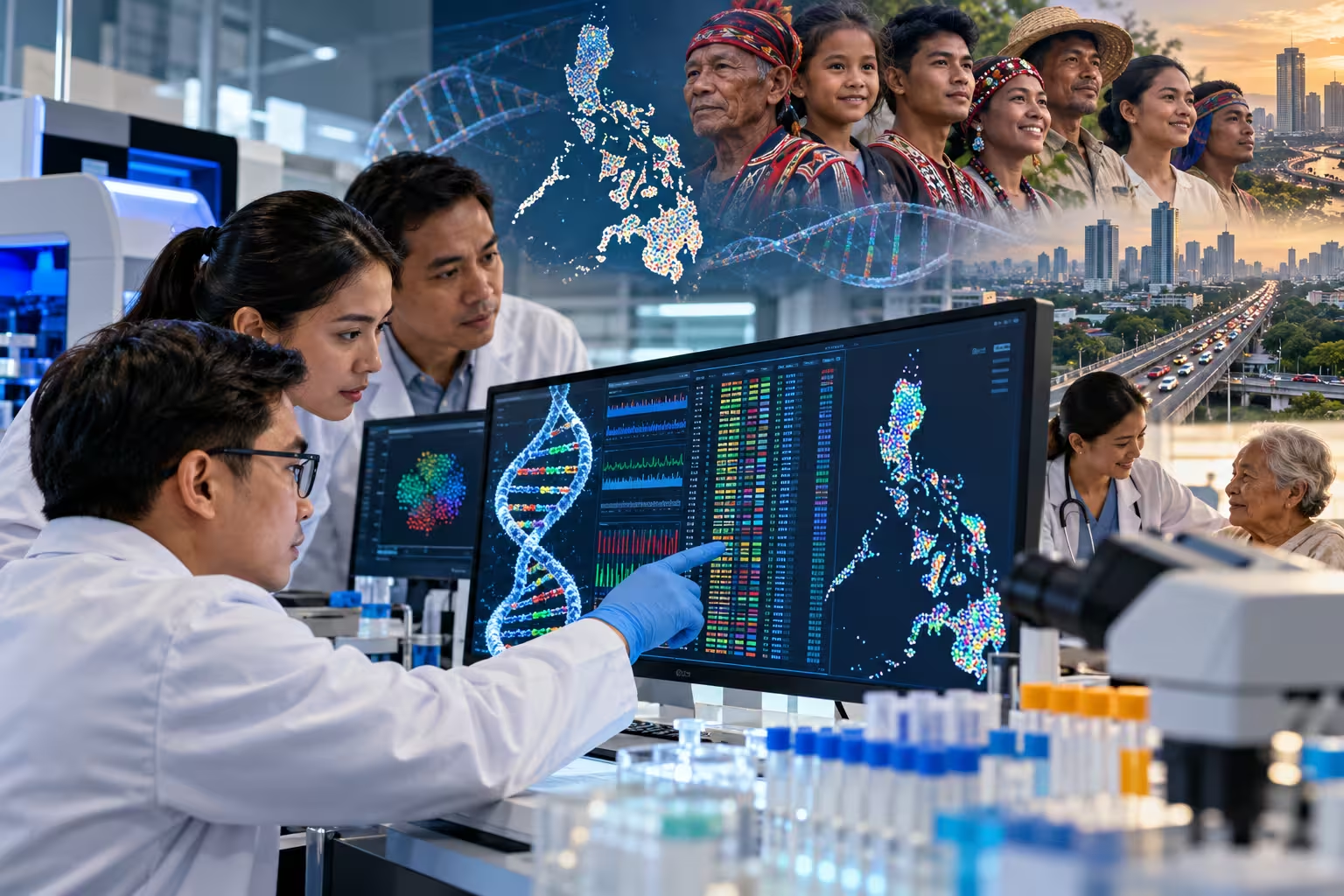
Despite these interventions, significant gaps remain in achieving equitable healthcare access. Addressing the maldistribution of healthcare workers, improving infrastructure, and implementing culturally sensitive education programs are essential for long-term solutions. Combining innovative care delivery methods with government policies and community participation can help ensure that geographic isolation does not limit healthcare access.
Ultimately, improving healthcare in the Philippines’ remote areas requires sustained investment, strategic planning, and the integration of modern technology with community-based approaches. Strengthening these aspects ensures that residents, regardless of location, can receive timely and quality medical care, bridging the gap between rural and urban health outcomes.