

The influence of Spanish colonialism on Filipino culture is evident in various aspects of life, and one of the most prominent areas of influence is in the country’s cuisine. The Philippines was under Spanish rule for over 300 years, from 1565 to 1898, which left a profound mark on Filipino food. This period shaped the culinary landscape, blending indigenous flavors with Spanish ingredients, techniques, and dishes.
One of the most notable contributions from Spanish cuisine to Filipino food is the introduction of European-style stews. Dishes such as callos (beef tripe stew) and pochero (chicken or pork stew) are direct adaptations of Spanish recipes, showcasing the Spanish taste for rich, hearty meals. These stews often feature a variety of meats, vegetables, and a rich broth—ingredients that were commonly used in Spanish kitchens. Furthermore, these dishes have evolved over time to incorporate local Filipino ingredients, making them uniquely Filipino while retaining their Spanish roots.
Spanish influence is also evident in the use of adobo, which is perhaps one of the most famous Filipino dishes. Though the Filipino version of adobo has undergone significant modifications, the method of marinating and slow-cooking meat with vinegar and spices is believed to be derived from the Spanish technique of marinating meat in wine or vinegar. Over time, the Filipino adobo became a more distinct dish, with variations including the use of soy sauce and local spices, but its origins are rooted in Spanish culinary practices.
In addition to savory dishes, Spanish desserts have also had a lasting impact on Filipino sweet treats. For example, leche flan—a smooth custard dessert—is a popular Filipino delicacy that is directly derived from the Spanish flan. Similarly, tarta (Spanish pastries) were adapted and transformed into Filipino versions, such as ensaymada, a sweet brioche-like bread topped with butter, sugar, and cheese. These sweet dishes, once exclusive to the Spanish nobility, have been embraced by Filipinos and are now an essential part of the local food culture.
Another important aspect of the Spanish culinary influence is the introduction of the sarap flavor profile—a balance of sweet, salty, and savory—which is now a hallmark of Filipino cooking. Ingredients like olives, capers, and dried herbs, commonly found in Spanish dishes, also made their way into Filipino kitchens, enriching the diversity of flavors in Filipino cuisine.
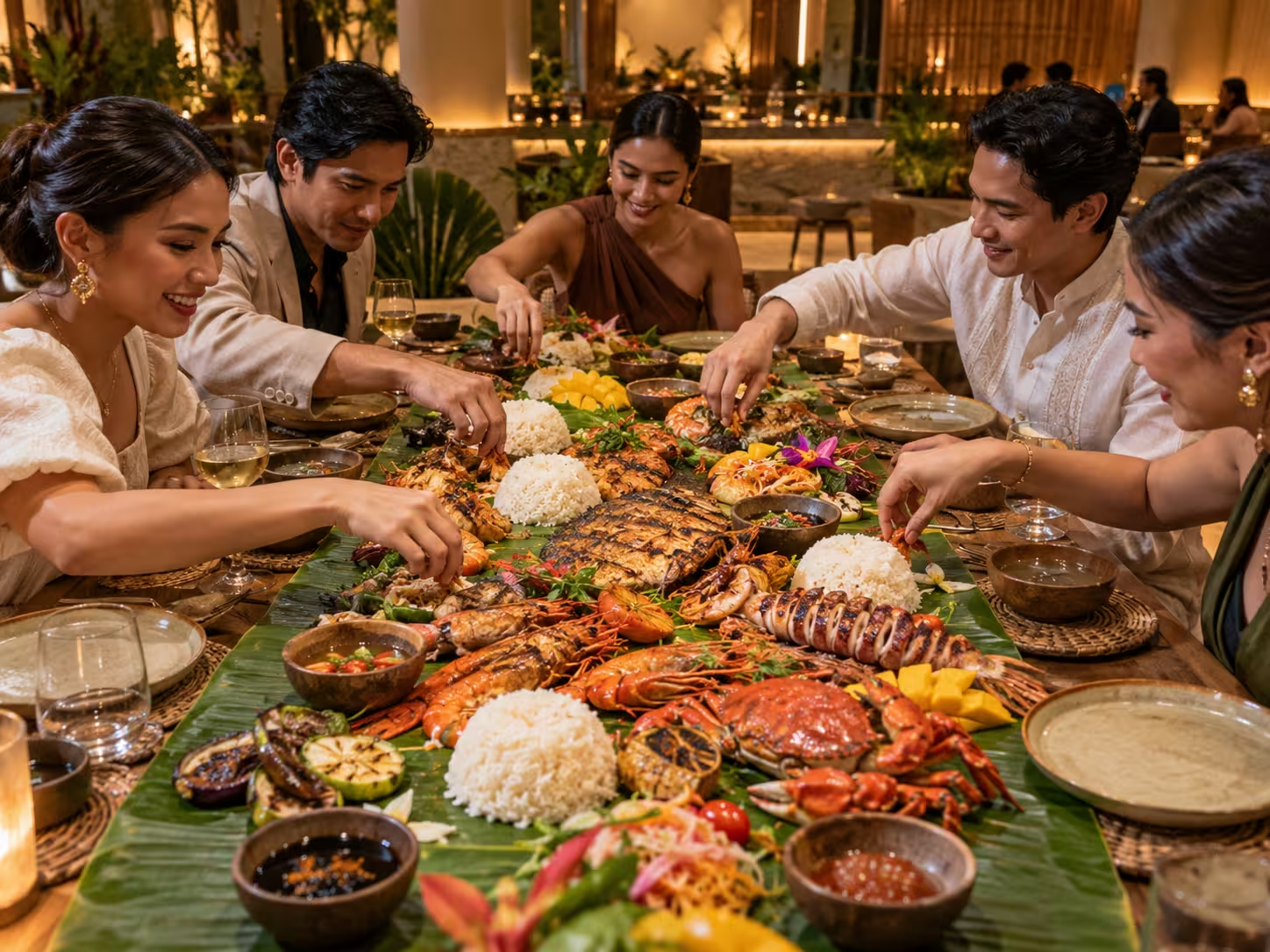
Despite these Spanish influences, Filipino cuisine is a unique blend of multiple cultural traditions. The fusion of indigenous Filipino, Chinese, American, and Spanish culinary practices has given rise to a rich and diverse food culture. The lasting impact of Spanish food on Filipino cuisine can be seen in everyday dishes enjoyed by people across the archipelago. It is a testament to the enduring legacy of Spain’s presence in the Philippines, and how it has shaped Filipino food into what it is today.