
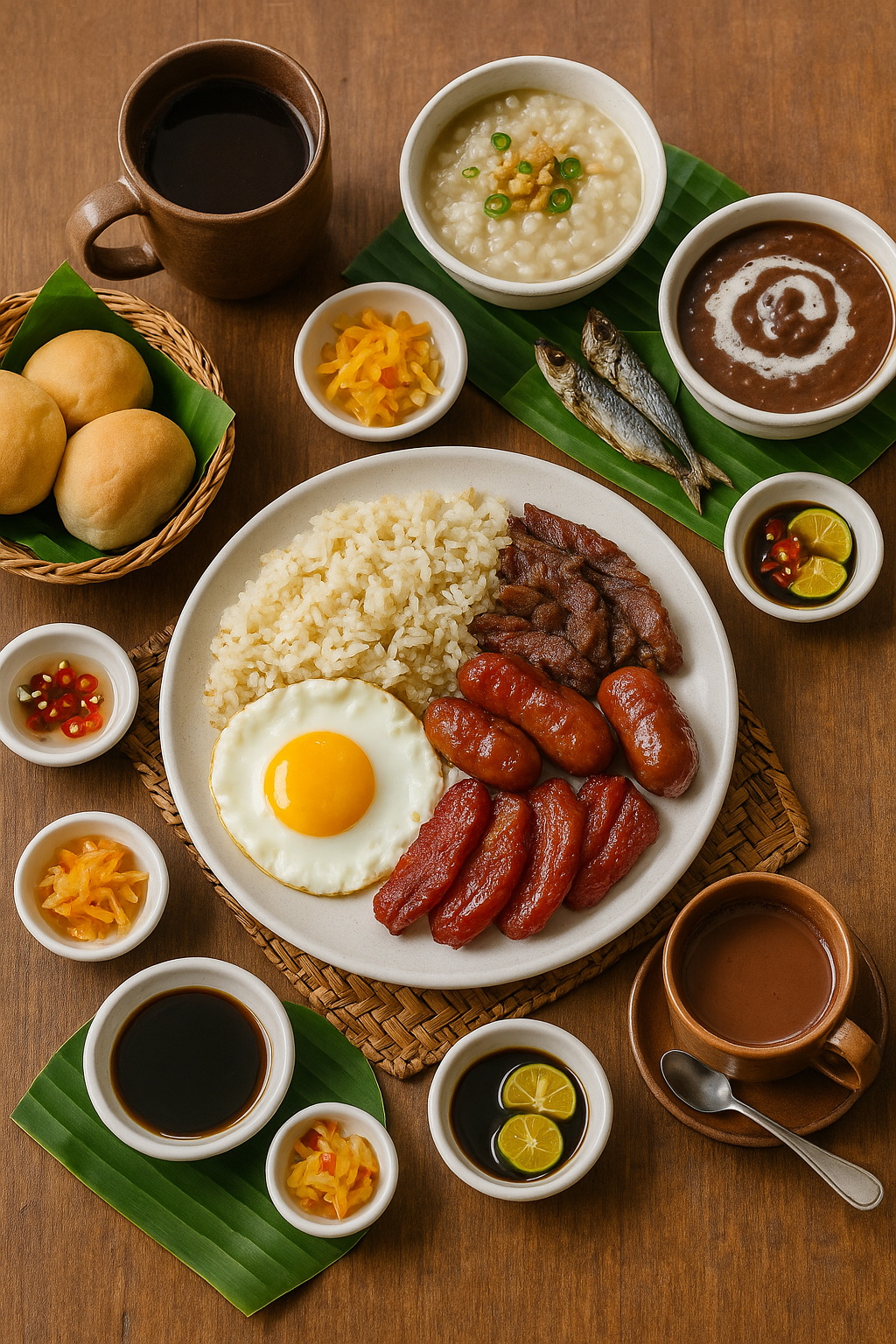
Filipino breakfast, often called almusal, is built on the comforting rhythm of rice, savory protein, and bright, punchy condiments. At the center is sinangag—garlic fried rice made from leftover grains tossed with oil and plenty of minced garlic—paired with itlog (egg). Add a protein and you get the nation’s beloved “silog” trios: tapsilog (beef tapa), longsilog (sweet-savory longganisa sausage), tosilog (cured pork tocino), and variations like spamsilog, cornedsilog, or bangsilog with milkfish. The appeal is practical: hearty calories for an active day, flavors designed to wake up the palate, and speed—most items cook quickly in a home kitchen or a busy carinderia.
Rice isn’t the only foundation. Hearty porridge traditions bring soothing warmth to the morning table. Lugaw is a plain rice porridge that takes on personality from toppings like fried garlic, chopped scallions, and a squeeze of calamansi. Arroz caldo, richer and gingery, often folds in shredded chicken and a drizzle of patis (fish sauce). On rainy days, many reach for champorado, a cocoa rice porridge made with local tablea chocolate, balanced with a splash of milk. The intriguing counterpoint? Salty dried fish like tuyo or daing served alongside, creating a sweet-salty duet that defines Filipino comfort.
Bread has its own revered place. Pandesal, a lightly sweet roll dusted with crumbs, is the everyday staple—eaten plain, spread with butter, cheese, or fruit preserves, or stuffed with scrambled eggs and corned beef. Street mornings hum with vendors selling taho: warm silken tofu drenched in arnibal (brown sugar syrup) with sago pearls; it’s a gentle, protein-rich start. Drinks matter, too: barako coffee from Batangas is bold and aromatic, while tsokolate (hot chocolate) made from pure cacao tablea delivers rustic depth, especially in the Visayas and Mindanao where it’s also called sikwate.
Condiments and sides knit the plate together. Vinegar dips—plain or infused with chilies and garlic—cut through rich meats. Toyo (soy sauce) and calamansi add briny-citrus zip; atchara (pickled green papaya) brings crunch and sweetness that refresh heavy bites. Regional character shows up in details: garlicky, tangy Vigan longganisa in Ilocos; herb-laced Lucban longganisa in Quezon; buttery bangus (milkfish) in Pangasinan; and in Cebu, puto maya (sticky rice with ginger) paired with sikwate and ripe mango.
What makes Filipino breakfast distinctive is balance and adaptability. It welcomes leftovers, invites customization, and honors local produce and craft. A weekday plate might be as simple as sinangag, egg, and a quick sauté of canned corned beef with onions; a weekend spread might feature grilled fish, porridge, pandesal, and tablea. Whether you’re exploring at a market stall or cooking at home, the best way to understand almusal is to notice its contrasts: soft and crunchy, rich and acidic, sweet and salty—always arranged to fuel the day with both comfort and character.