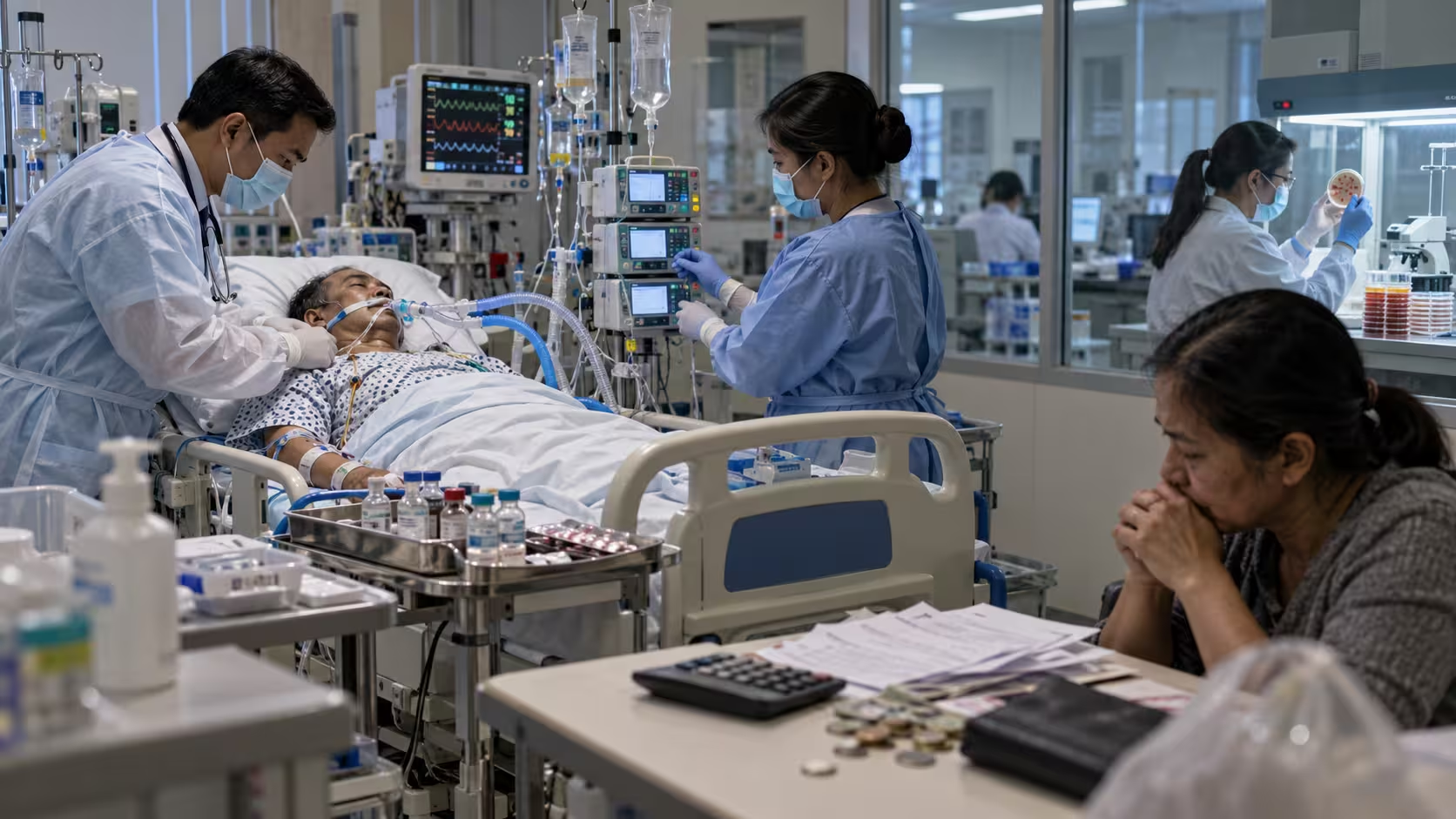

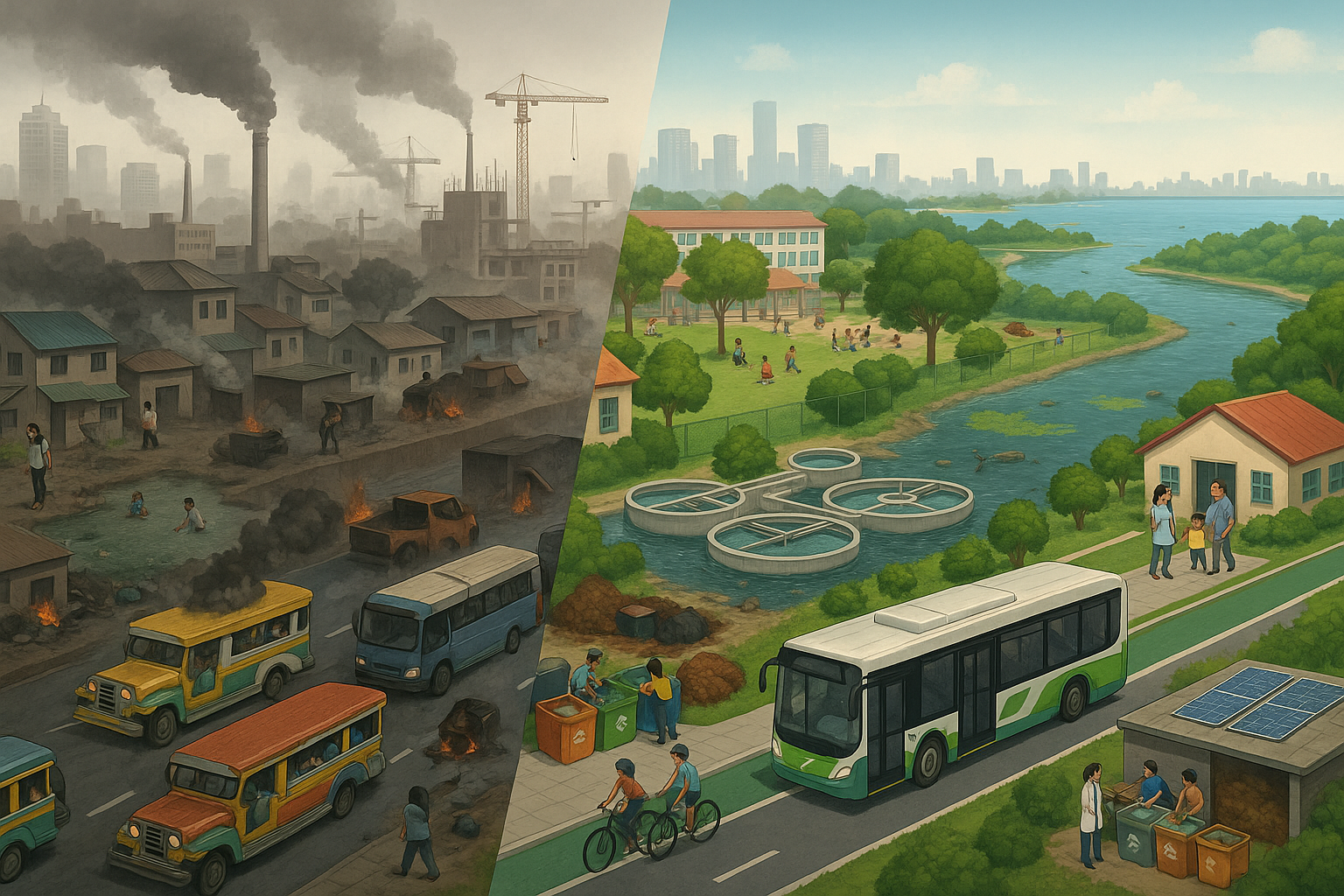
Pollution in the Philippines affects health along multiple pathways—air, water, soil, and waste—each intersecting with climate, poverty, and urban design. The most visible burden sits over major cities where traffic, diesel engines, construction dust, and industrial stacks elevate particulate matter (PM2.5 and PM10). These tiny particles slip deep into the lungs and bloodstream, aggravating asthma, triggering chronic obstructive pulmonary disease, and increasing the risk of heart attacks and stroke. Nitrogen dioxide and sulfur dioxide further irritate airways, while ground-level ozone forms on hot, stagnant days and worsens respiratory symptoms, especially among children and older adults.
Indoor air quality remains a quieter but persistent threat. In some homes, cooking with charcoal or biomass exposes families—often women and young children—to smoke levels far above safe guidelines. Long hours in dense traffic also create chronic exposure for jeepney drivers, street vendors, and commuters, compounding risks of hypertension and cardiopulmonary disease.
Water pollution presents a different chain of harms. Untreated sewage, stormwater overflows during typhoons, agricultural runoff, and industrial effluents degrade rivers, estuaries, and coastal zones. When drinking water is contaminated, communities face diarrheal diseases and parasitic infections; after floods, leptospirosis becomes a well-known danger. Heavy metals from mining legacies or informal battery recycling can accumulate in sediments, threatening fish and, ultimately, human consumers through bioaccumulation.
Solid waste and plastics amplify these challenges. Where collection is inconsistent, informal dumps and canal blockages promote mosquito breeding and flooding. Open burning of trash releases dioxins, furans, and fine particles, creating localized but intense exposure. Coastal plastic debris harms fisheries and tourism while microplastics appear in seafood and salt, with still-evolving implications for human health.
The health burden is not distributed evenly. Urban poor communities living near busy roads or industrial zones face higher exposures, while rural areas can struggle with indoor smoke and unsafe wells. Climate hazards—heat waves, stronger typhoons, storm surges—interact with pollution by concentrating sewage, stirring sediments, and accelerating ozone formation. Schools and health facilities can be overwhelmed during outbreaks of waterborne disease after major storms.
The policy landscape offers tools but requires sustained enforcement and investment. Key laws—such as the Clean Air Act, Ecological Solid Waste Management Act, and Clean Water Act—set standards, yet monitoring networks, laboratory capacity, and inspection regimes need steady support. Vehicle standards and fuel improvements reduce emissions from transport, and modernizing fleets away from older diesel engines yields immediate respiratory benefits. Expanding wastewater treatment, rehabilitating rivers, and protecting mangroves can improve both water quality and resilience.
Communities are part of the solution. Low-cost air sensors, school-based asthma surveillance, and early-warning systems for floods and contamination help target interventions. Encouraging active transport, building shaded sidewalks and bike lanes, and planting street trees can cut exposure while improving urban livability. For households, cleaner stoves, smoke-free homes, and point-of-use water treatment are practical steps.
Ultimately, reducing pollution saves lives and money. Fewer hospital admissions, higher productivity, safer pregnancies, and healthier children are tangible returns. The Philippines can align health, environment, and transport policies so that every clean kilometer traveled, every liter of sewage treated, and every kilo of waste segregated translates into measurable gains for people and places.